
Gradient check mark inside a circle icon
100+ Natural Voice options
Gradient check mark inside a circle icon
20+ TTS languages, each with a dedicated proprietary voice model
Gradient check mark inside a circle icon
3 voice tiers, built for every latency and infrastructure need

Natural speech, proven to sound like a real person

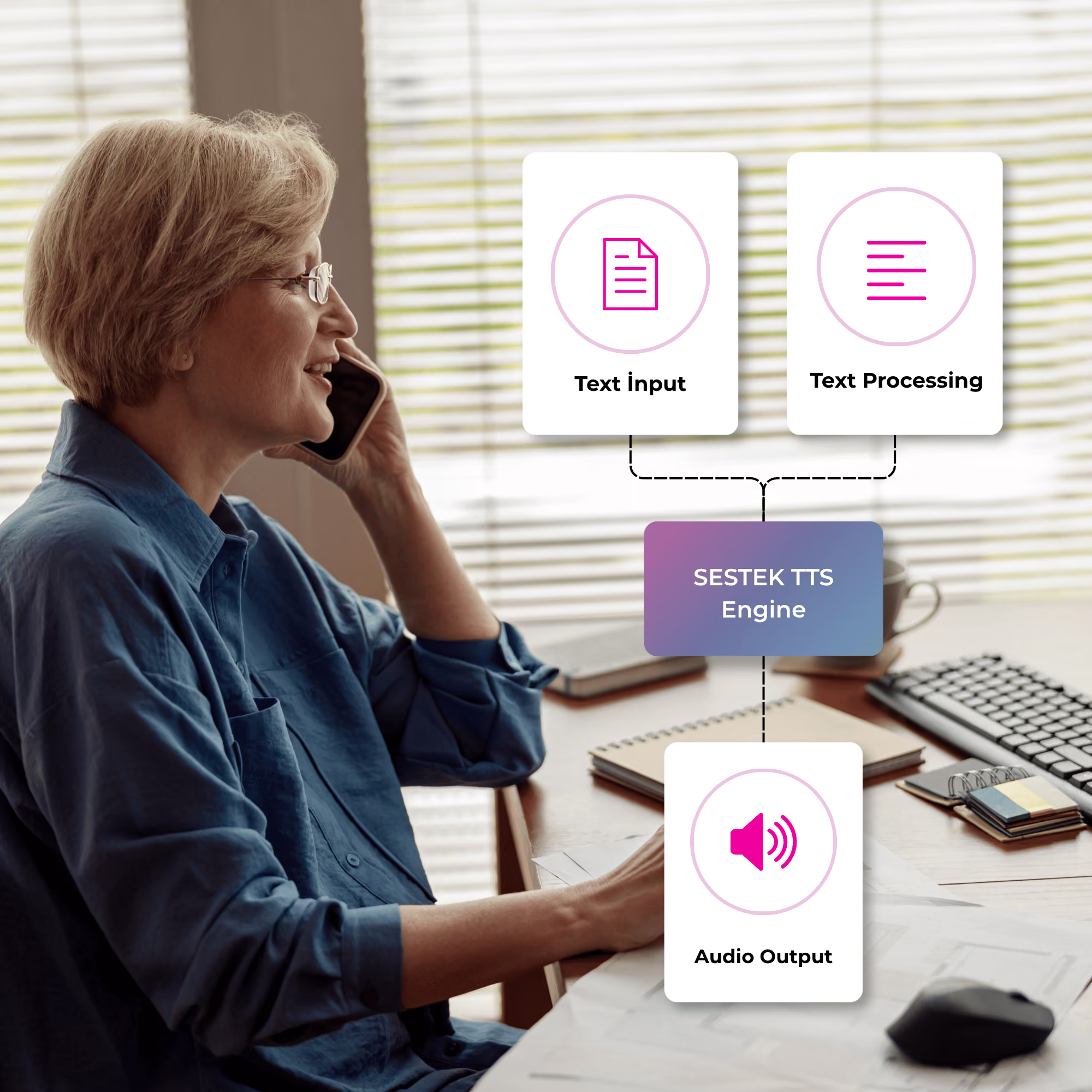
Neural voice technology that reduces cost, speeds up deployment, and sounds like a person on every channel.

Measurable  enterprise impact

700+
Enterprises,
one standard
100%
Project delivered
to production
98%
Speech recognition
accuracy
25+
Years engineering
the future

Discover the key benefits

Neural voice technology that reduces cost, speeds up deployment, and sounds like a person on every channel.
Gradient arrow curving upward

Natural experience

Built on LLM-based neural architecture, TTS delivers natural-sounding, neutral voices that closely resemble human speech, minimizing the mechanical, robotic quality of synthetic speech.

Gradient icon showing two arrows circling a square

Lower costs

Fully automated voice output reduces the need for human voice actors on every announcement, and updates go live instantly, with no re-recording.

Gradient floppy disk save icon

Faster integration

APIs and SDKs add voice capability to existing software without significant infrastructure changes, so developers ship voice-enabled experiences in days, not months.

Grey background with two soft cyan and magenta colour blobs

Voice technology developers can actually control

Every feature is built to give your brand a consistent, natural voice across every channel.

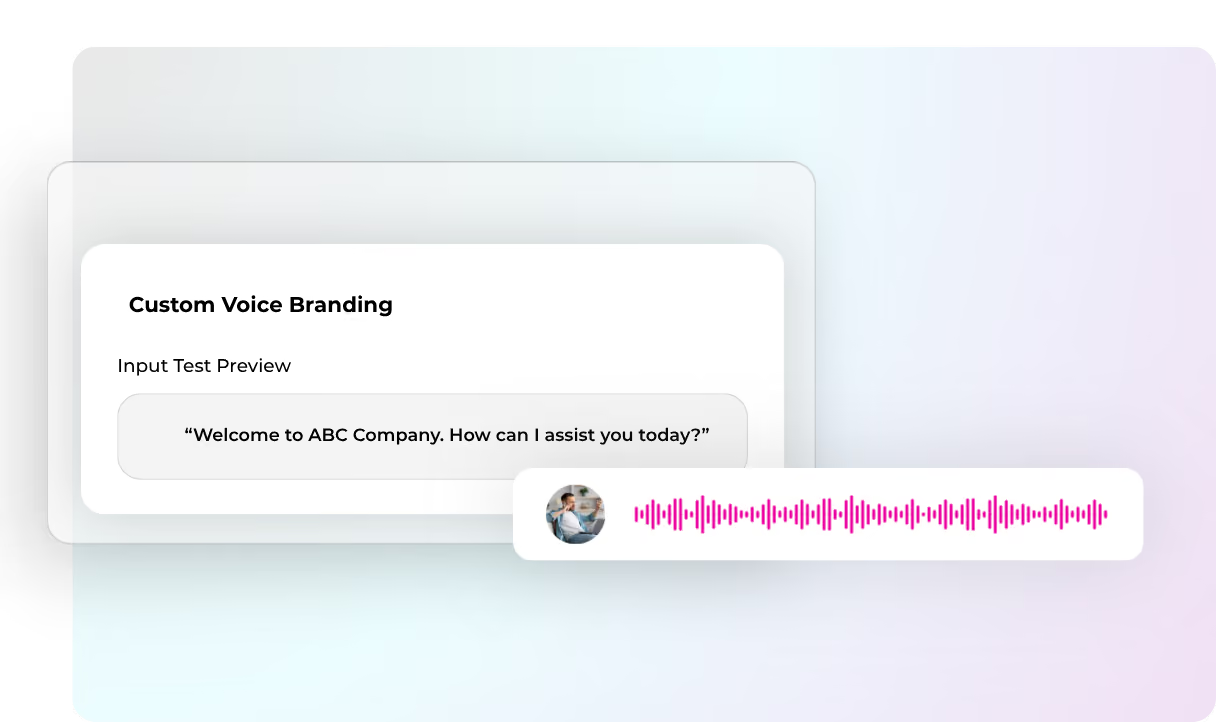
Custom voice branding

Rather than relying on a generic voice profile, a voice is developed that reflects your brand identity and audience expectations, exclusive to your organization.

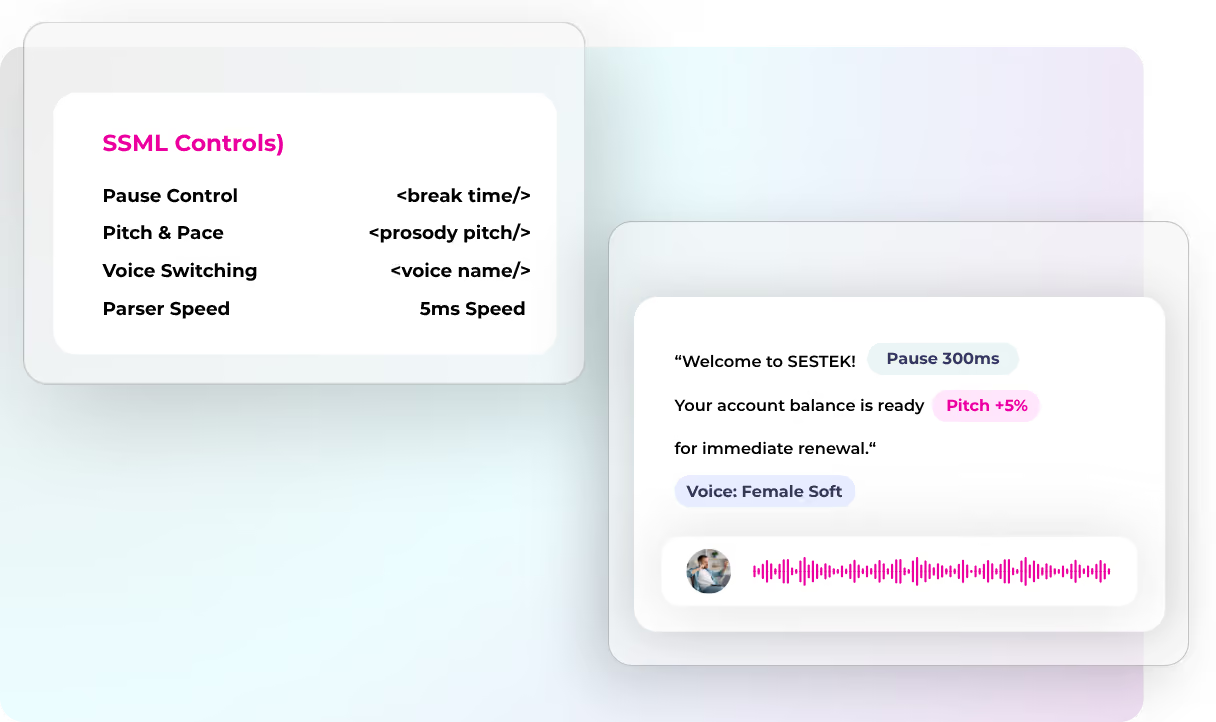
SSML tag support

TTS supports the most widely used SSML tags, controlling pauses, pronunciation, external audio, and voice switching to shape exactly how every word is spoken.

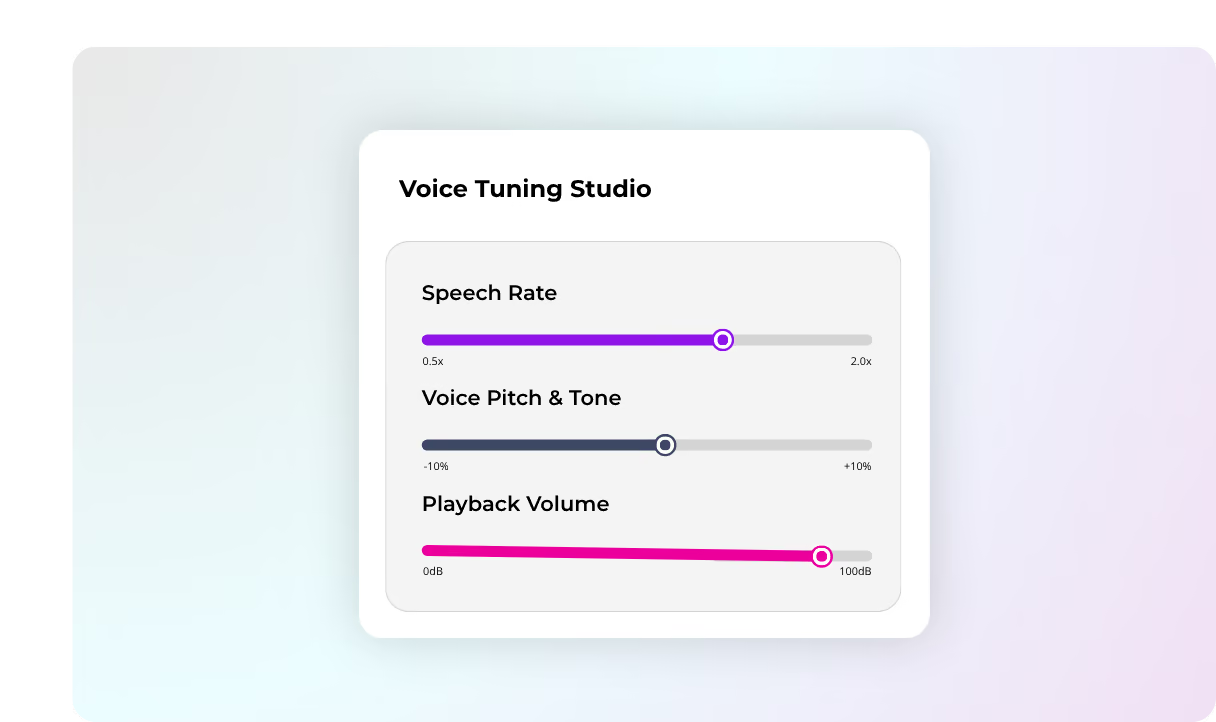
Voice tuning

Adjust the tone, pace, and emphasis of synthesized audio, speed to match your content format, volume for different playback environments, without changing the underlying voice model.

Custom abbreviations

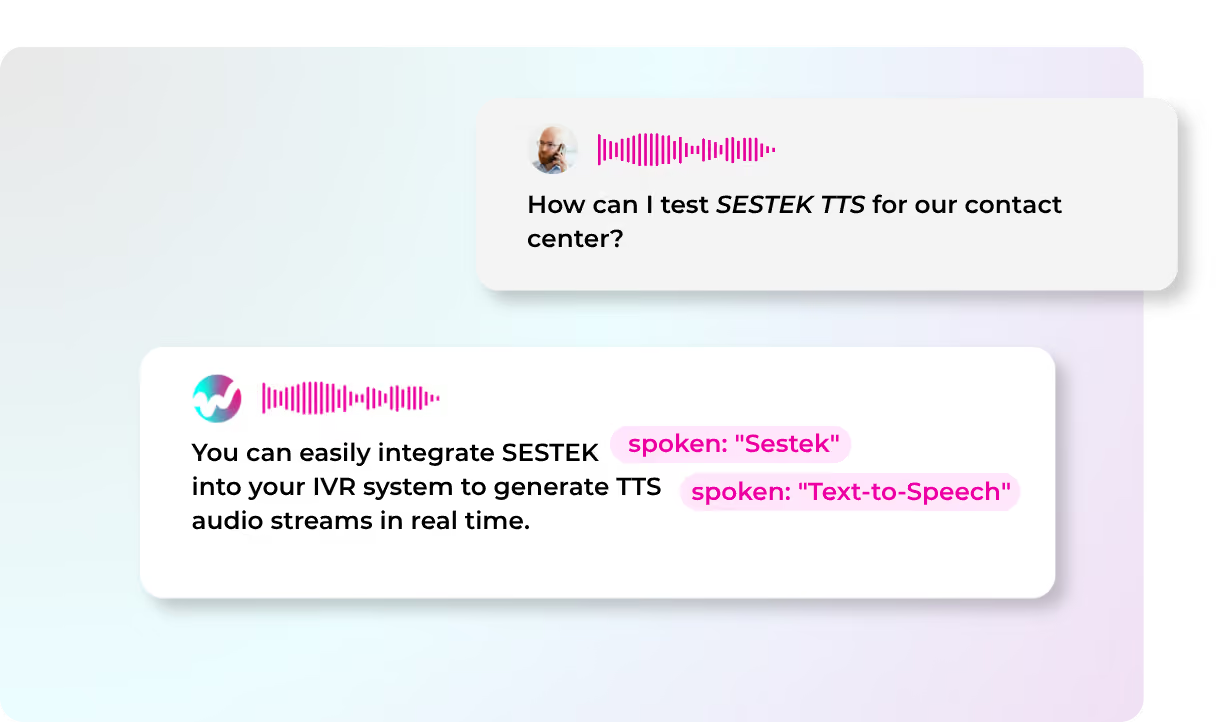
Define pronunciations for brand names, product codes, and industry terms that standard models get wrong, so "TTS" reads as "Text-to-Speech" instead of being spelled out letter by letter.

Flexible deployment

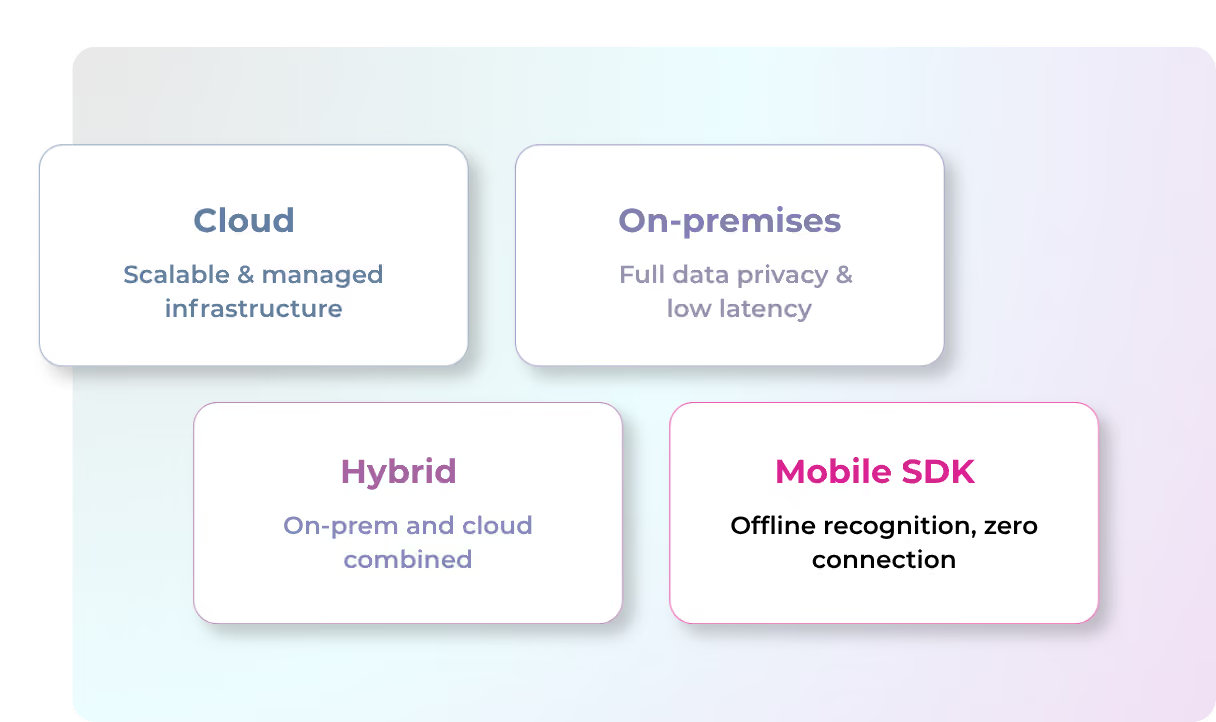
Deploy on-premises for full data control and reduced latency, or in the cloud for zero infrastructure overhead, same capabilities either way.

Pale blue and white gradient background

Owned technology

SESTEK controls the model, the roadmap, and the pricing. No dependency on a third party changing an API or deprecating a voice you've already deployed with.

Proven quality

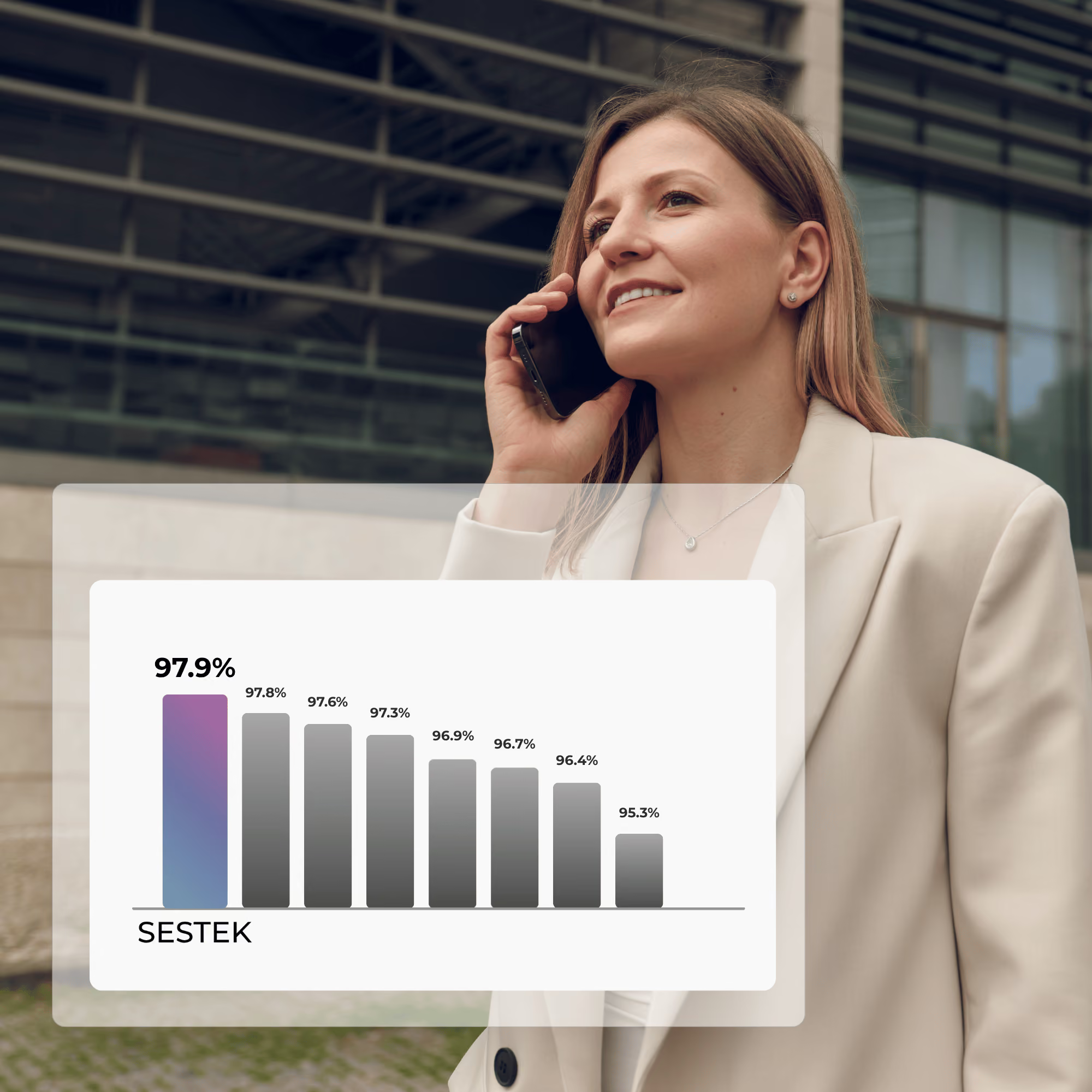
Voice quality is validated through blind MOS (Mean Opinion Score) testing against the market, not asserted without evidence.

Deploy where your data lives

On-premises for full data control and lower latency, or cloud for zero infrastructure overhead, same voice quality either way.

Integration flexibility

For teams with existing provider relationships, SESTEK's platform also supports Azure and ElevenLabs integrations, flexibility without lock-in.

Licensing that fits your scale

Pay-as-you-go, subscription, or custom agreements, businesses choose the model that fits their volume, not the vendor's default.

Connected intelligence

Connect TTS with SR, Virtual Translator, and AI Agents within the SESTEK Agentic CX Suite to deliver consistent, context-aware support across every interaction.

Explore the rest of the lifecycle

From autonomous voice agents to real-time conversation analytics, discover how the SESTEK Agentic CX Suite elevates every touchpoint of your customer experience.

FAQs

Agentic AI solves complex queries. Autonomous execution, hybrid LLM reasoning, enterprise governance. Explore our answers to see what scales.
Can we create a custom brand voice?
Yes. Rather than relying on a generic voice profile, SESTEK works with your team to develop a voice that reflects your brand identity and audience expectations, a specific speaker, a specific tone, or a voice that matches your existing brand audio presence. The resulting voice model is exclusive to your organization; it isn't shared with other customers.
Does TTS require a GPU?
It depends on the voice tier. Standard-tier voices run across a wide range of environments: Windows, Linux, Docker Compose, and Kubernetes, without needing a GPU. Flash-tier voices are GPU-optimized neural voices designed for low latency and high throughput, though they can also run on CPU if GPU isn't available. Premium-tier voices deliver the highest-quality, most natural-sounding output, but they require a GPU and are available on Linux, Docker Compose, and Kubernetes.
Can we deploy on-premises?
Yes. TTS is available in both on-premises and cloud deployment models, and businesses get the same feature set in either environment. On-premises deployment keeps data fully within your infrastructure, which supports faster processing, reduced latency, and straightforward integration with existing systems. Cloud deployment removes the operational overhead of managing your own environment, resources scale on demand, there's no hardware to maintain, and the service is accessible from any device with an internet connection.
What languages and accents are supported?
SESTEK TTS supports 20 + languages, each backed by a dedicated, optimized voice model. Coverage goes beyond language-level support to accent-specific voices that reflect real-world speech diversity, for example, Gulf, Najdi, Kuwaiti, and Emirati accents within Arabic, and separate American (en-US) and British (en-GB) voice sets within English. This is designed to make synthesized speech feel more natural and relatable to the specific audience it's speaking to.
Can we control how specific words are pronounced?
Yes. Businesses can define their own custom abbreviations and pronunciations for words or terms that standard pronunciation models tend to get wrong, brand names, product codes, and industry-specific terminology in particular. As an example, "TTS" can be configured to be read aloud as "Text-to-Speech" instead of being spelled out letter by letter.
How is TTS licensed?
SESTEK TTS is available under a variety of licensing models, including pay-as-you-go, subscription-based, or custom agreements, so businesses can choose whichever option is most cost-effective for their scale and usage pattern, rather than being locked into a single pricing structure.