A natural voice now costs about a cent. So where does the real price of voice AI hide? Explore how agent handoffs drive cost and how one live deployment cut waiting time by 31%.
Do you still need a studio to give your brand a voice?
For years, every voice prompt in a contact center came with a production cost. A new campaign, a new product name or a changed policy meant booking a voice actor and recording again.
Neural text-to-speech has turned that into a software update. SESTEK TTS is built on an LLM-based neural architecture, so its voices carry the rhythm, pauses and intonation of real speech. When a script changes, the new version goes live instantly.
Here's what that makes possible today:
A voice that is yours: Custom voice branding and voice tuning, so your assistant sounds like your brand, not a stock voice.
The accent your customers speak: 20 languages, including en-US and en-GB voice sets and accent-specific Arabic voices: Gulf, Najdi, Kuwaiti and Emirati.
Every word said right: SSML, a simple markup that tells the voice how to speak, controls pace, pitch and emphasis. Custom abbreviations get product names and codes right.
Quality you can measure: Voices tested in blind MOS evaluations, where listeners rate how natural a voice sounds without knowing what they are hearing.
And it fits your budget and your infrastructure.
Standard: Runs without a GPU, on Windows, Linux, Docker or Kubernetes.
Flash: GPU-optimized for speed, with CPU fallback.
Premium: The highest voice quality, on GPU.
On-premises or in the cloud, with the same features either way. Licensing can be pay-as-you-go, subscription or custom, and developers can add voice to existing systems through APIs and SDKs in days, not months.
Key takeaway
The question is no longer whether you can afford a natural voice. It is whether the rest of your assistant can keep up with it.
Hear It Yourself: Premium Voice. For a Cent.
Can you still tell which one is synthetic? Listen to SESTEK's TTS voices and judge for yourself.
If the voice is this affordable, why do voice AI assistants still cost more than planned?
Because the expensive part is usually invisible. In this month's blog, SESTEK Lead Product Owner Mert Çıkan shows that the cost of an AI assistant is decided by how it is built, not by the rate written into the contract.
Most voice AI assistants today are a team of specialist AI agents. Picture a customer booking a service visit: one agent identifies the product, one takes the contact details, one confirms the address, one finds a slot. To the customer, it is one simple request.
But every time the conversation moves from one agent to the next, the system may pause to re-read everything said so far. The customer hears that as silence. The business pays for it as processing.
Anthropic's own engineers report that multi-agent systems use about 15× more tokens (the units of text an AI model processes, and is paid for) than simple chat. (How we built our multi-agent research system, Anthropic Engineering, June 2025)
So the real price is set in the handoffs between agents. Mert's team found three ways to stop paying there:
Let specialists pass the baton directly. Agents hand the conversation straight to the next specialist, instead of sending every step back through a coordinator. The extra round trip is not made shorter. It disappears.
Don't ask AI a question you already know the answer to. If a product type always goes to the same specialist, the system routes it directly. No AI decision, no wait.
Stop carrying data that has done its job. Once an address is verified, the full lookup result no longer needs to travel with every turn. Dropping it cuts cost and, as research from Chroma shows, keeps answers more reliable.
SESTEK compared two stretches of live production traffic: the same days of the week, one week apart, with tens of thousands of calls on each side.
31% less waiting before the assistant starts to answer
11% lighter processing per conversation (76.5K → 68.2K tokens)
7% shorter conversations (135s → 126s)
~70% self-service rate, unchanged
This is where the two halves of the story meet. A natural voice only feels natural if it answers on time. Cutting the pause before the first word by 31% is something every caller hears, even if they never know why.
The self-service rate is what makes the rest meaningful: the same share of callers still finished what they came for without needing a person. Same work, done faster, for less. And nothing was bought to get there: same model, same vendor, same contract.
From the SESTEK Blog
"The price of AI is not quoted in the contract. It is designed in the lines between agents."
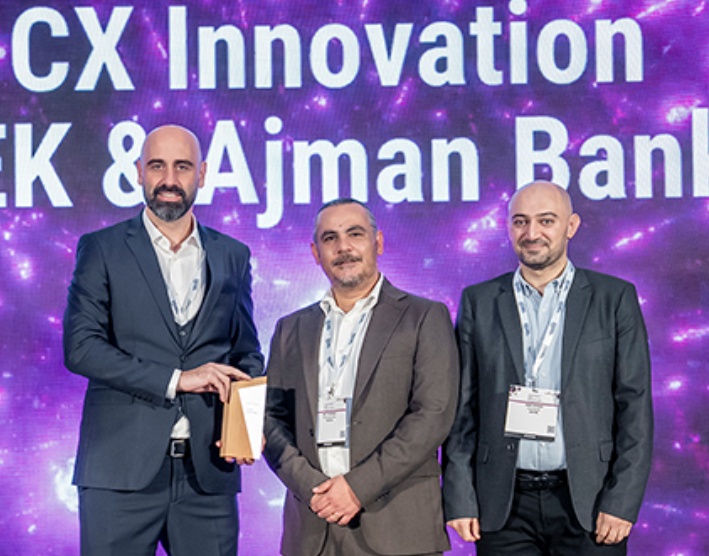
🏅 Award: Best CX Innovation at Customer Experience Live Awards MENA
Our collaboration with Ajman Bank has been recognized with the Best CX Innovation award. Thank you to Hassan Aljassmi and the Ajman Bank team, and to Ahmet Subaşı, Managing Director MEAPAC, for representing SESTEK.
Partnership: Showcasing Conversational AI for Banking in Malaysia
Raj Akshintala, our Director of Sales & Customer Success for APAC, joined partners Alvaria CX and Lambda Technologies in Malaysia for a series of demos on how SESTEK supports banking contact centers. Great feedback, and more to build together across the region.
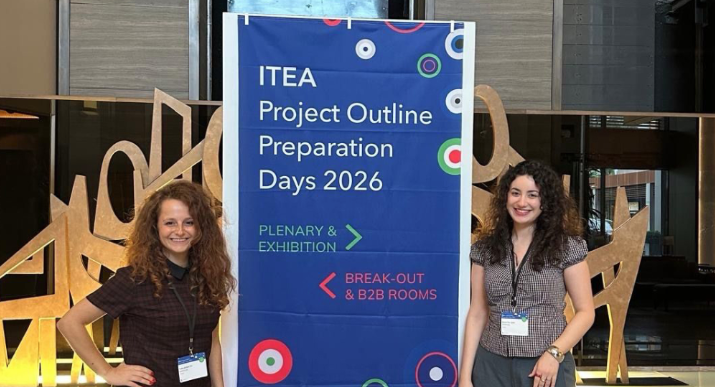
R&D: SESTEK at ITEA PO Days 2026, Istanbul
Over three days of exhibitions, working sessions and poster presentations, we shared our conversational AI solutions with international partners and explored new collaborative R&D projects with the ITEA 4 and EUREKA community.
A Question Worth Asking
Your AI may sound human. Does it also respond like one?
A natural voice gets you halfway. The rest is decided by what happens behind it.
The voice is what customers hear. The architecture is what you pay for.
Follow SESTEK on LinkedIn and join the conversation.