Generative AI shifted virtual assistants from keyword-matching rule-based systems to context-aware conversational agents that understand nuance, intent, and behavioral patterns.
89% of frequent generative AI application users express satisfaction with chatbots, per Capgemini Research — validating the UX improvement GenAI has delivered.
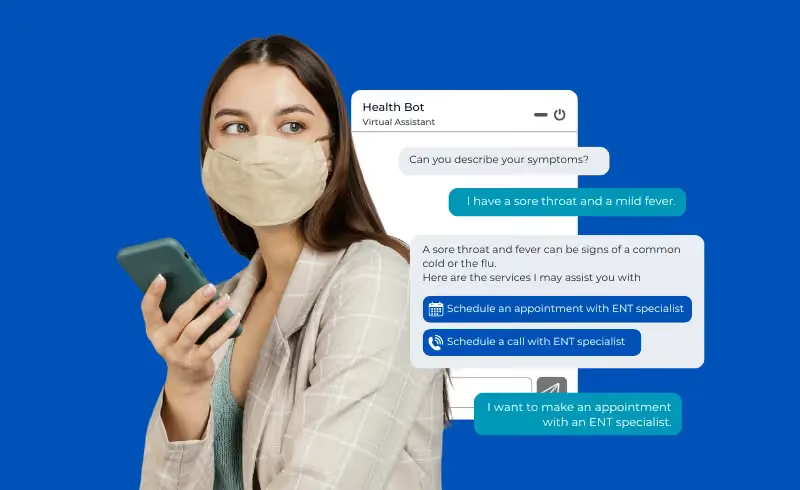
SESTEK's GenAI integration enables fallback answers for out-of-scope queries, customized prompt-based responses, and healthcare symptom checking via generative question answering.
High personalization is now possible: virtual assistants remember past interactions, preferences, and purchase history — eliminating the need for users to repeat themselves.
Enhanced integration capabilities mean GenAI-powered assistants handle complex queries across diverse applications dynamically, without the extensive manual programming previously required.
Generative AI has revolutionized the functionality of countless tools, enhancing their efficiency, practicality, and overall usefulness. Virtual assistants are no exception. With advancements in Generative AI, these assistants have evolved into powerful technological tools that significantly simplify users' lives.
In this blog post, we'll explore the transformation of virtual assistants before and after the advent of Generative AI, highlighting its profound impact on conversational solutions, with examples from SESTEK.
Generative AI and Virtual Assistants
Generative AI is revolutionizing how virtual assistants operate. By leveraging advanced algorithms and machine learning, it enables virtual assistants to generate personalized responses, suggestions, and insights tailored to each user’s preferences, behavior, and context. This not only enhances the user experience but also fosters greater engagement and satisfaction.
As a result, generative AI-powered conversational solutions are gaining widespread adoption across all age groups. According to the Capgemini Research Institute, consumers from various generations are increasingly using these tools, with chatbots leading at 15% adoption. Moreover, satisfaction levels are highest among frequent users of generative AI applications, with 89% expressing satisfaction with chatbots.
But what makes generative AI-based conversational tools so indispensable for today’s consumers? And how has generative AI fueled this surge in popularity?
Virtual Assistants: A Before-and-After Comparison
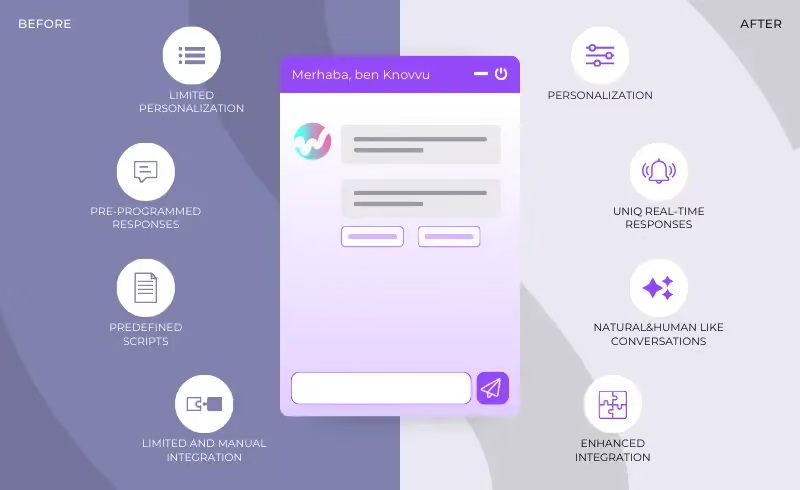
Advancements in Generative AI technology have made virtual assistants more intuitive, versatile, and user-focused, transforming them into powerful tools for both personal and professional use.
Let’s explore how virtual assistants have evolved with the rise of Generative AI technology:
Enhanced Understanding
Before the advent of Generative AI, virtual assistants were primarily rule-based, relying on predefined scripts and basic Natural Language Processing (NLP) algorithms. These assistants could recognize only specific keywords or phrases, often missing the broader context and struggling with complex language, which frequently led to misunderstandings of user intent.
With Generative AI, virtual assistants have significantly evolved to process and understand complex language, including context and nuances, facilitating more natural and human-like conversations. Advanced NLP models and contextual awareness enable these assistants to grasp intricate language structures, comprehend intent, and anticipate user needs. By analyzing previous interactions and identifying behavioral patterns, virtual assistants can proactively offer relevant information or suggestions, thereby enhancing the user experience.
Dynamic Responses
Before Generative AI, virtual assistants could only provide generic, pre-programmed responses. They were unable to adapt to different situations or offer detailed information, often repeating the same answers and struggling with unexpected questions.
With Generative AI, virtual assistants can now generate unique, context-specific responses in real-time. Instead of relying on pre-written scripts, they deliver more relevant and detailed information, even for unusual or complex queries. This advancement makes interactions smoother and more helpful.
High Personalization
Before Generative AI, virtual assistants offered limited personalization because they couldn't learn from user interactions. They provided the same responses to everyone, regardless of individual preferences or past interactions, which often resulted in a subpar user experience.
With Generative AI, virtual assistants can now learn from past interactions, thanks to AI-driven machine learning algorithms and memory functions. They can remember user preferences, deliver tailored responses, and create more personalized experiences. This means virtual assistants can offer relevant answers based on previous conversations, eliminating the need for users to repeat themselves. For example, they can provide personalized product recommendations based on purchase history and offer post-purchase support, significantly enhancing the overall user experience.
Enhanced Integration Capabilities
Before Generative AI, virtual assistants were limited in their ability to seamlessly integrate with various applications and systems. Their responses were more scripted and less adaptable, often requiring extensive manual programming and customization to handle different contexts and tasks.
With the advent of Generative AI, virtual assistants now have enhanced integration capabilities. They can interact with a wider range of applications and systems more dynamically, enabling real-time, personalized responses. This advancement allows virtual assistants to manage complex queries more effectively and offer contextually relevant solutions, making them more versatile and valuable in integrated environments.
How Generative AI Empowers Our Conversational Technologies
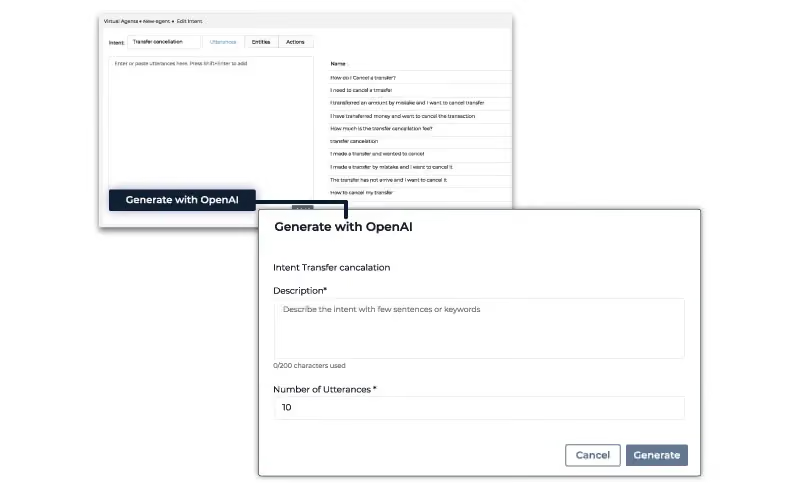
At SESTEK, we leverage the power of Generative AI to elevate our conversational technologies, transforming the way businesses engage with their customers. By integrating OpenAI’s advanced capabilities into our solutions, we enhance service quality and operational efficiency, broadening the scope of conversational automation. Let’s explore the specific capabilities our conversational solutions offer thanks to this integration.
Fallback Answers for Chatbots
Before Generative AI, our chatbot technology was limited to handling specific topics it was programmed to address. When users posed questions outside these predefined areas, the chatbot couldn’t generate fallback responses. Lacking access to a flexible and extensive database, this resulted in gaps in information and a less satisfactory user experience.
With Generative AI, our chatbots now utilize a vast knowledge base to provide fallback answers for queries beyond their initial programming. This advancement ensures that users receive relevant and contextually appropriate responses, facilitating smooth and continuous interactions even with unexpected questions.
Customized Answers
Before Generative AI, our virtual assistant technology relied on predefined scripts and lacked the capability to generate personalized responses. Custom prompts were not supported, resulting in generic responses that sometimes failed to avoid sensitive topics such as religious or political issues. This limitation restricted the level of personalization and relevance in user interactions.
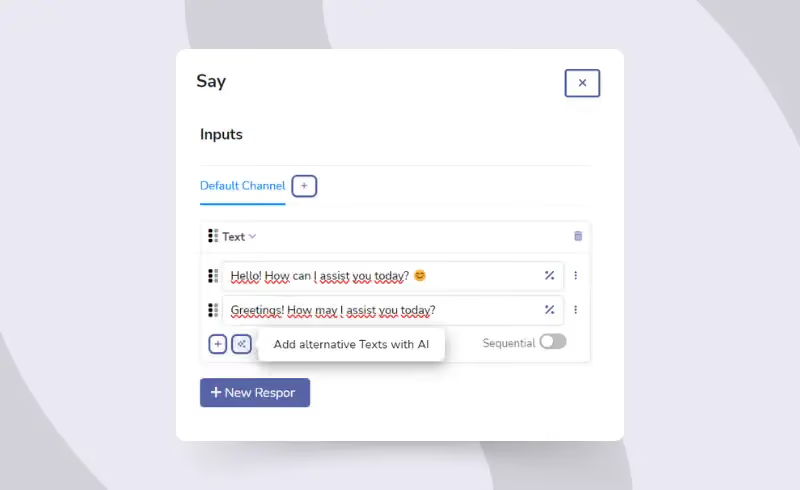
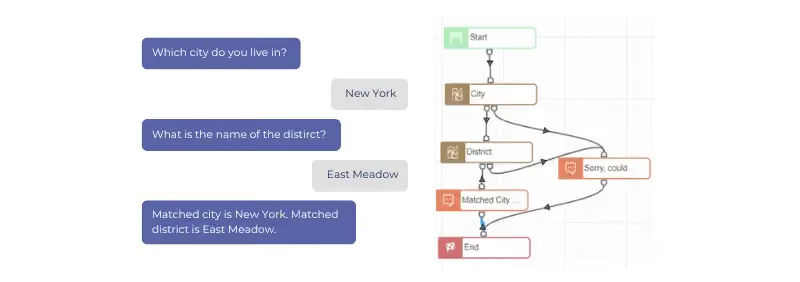
With the integration of Generative AI, our virtual assistants now utilize advanced algorithms to deliver highly customized responses. This technology allows for the creation of tailored answers based on specific prompts and user preferences, enabling the system to generate contextually relevant responses that address individual needs, including the ability to avoid or address particular topics as necessary. By carefully designing dialog flows, these enhancements lead to more engaging and personalized interactions, significantly improving the overall user experience.
Symptom Checker in Healthcare
Before Generative AI, we were limited in our ability to include a wide range of illnesses and comprehensive symptom information in our virtual assistant’s library. This made it challenging to direct patients to the appropriate specialists, often resulting in inadequate advice or referrals to incorrect doctors, which could delay necessary care.
With the integration of Generative AI, our virtual assistants now utilize Generative Question Answering to access an extensive symptom information library. This advancement enables them to provide more accurate advice and guide patients to the right specialists, even when direct access to doctors is limited. By offering tailored recommendations based on a broad spectrum of symptoms and conditions, we ensure that patients receive the support they need more efficiently.
A Natural Extension in Our Lives
The transformation of virtual assistants through Generative AI marks a significant advancement in how we interact with technology. By handling complex language, delivering highly personalized responses, and seamlessly integrating into various applications and systems, Generative AI has evolved virtual assistants from basic support tools into essential components of both personal and professional life. These advancements have not only enhanced the efficiency and versatility of virtual assistants but have also made them indispensable in our daily routines, providing solutions that are more intuitive, relevant, and responsive than ever before.
Share
More blogs from SESTEK
Understanding Generative AI: The Possibilities and the Pitfalls
In this article, we'll dive into large language models, exploring their key advantages, potential issues that might arise when relying solely on them for customer service, and practical solutions to maximize their effectiveness.
SESTEK President Serdar Karadayı explains why AI's real battleground is now experience, not intelligence, and how 25 years in speech technology led to voices so natural that users mistake them for real people.
The acquisition provides Unifonic with immediate access to Sestek’s suite of cutting-edge “Conversational AI and Analytics” solutions and a strong base of existing clients and partners.
Agentic AI: Works in Demo, Can it Survive in Production?
SESTEK Lead Product Owner Mert Çıkan shares why AI agents that look flawless in demos fail in production, and how SESTEK overcomes these barriers with hybrid autonomy.
The Reasoning Era of Conversational AI: From Understanding to Action
SESTEK Project Manager Rami Izhiman explores how Conversational AI is moving beyond speech recognition and predefined scenarios toward reasoning, contextual understanding, and decision-making.
Explore why secure enterprise AI projects require more than standard testing, and see how SESTEK helps organizations reduce deployment risks while securing sensitive customer data at scale.
The Rise of AI-Powered Virtual Agents in E-Commerce
Discover how AI-powered virtual agents transform e-commerce customer experience and operations while exploring how SESTEK's Knovvu Virtual Agent enables leading retailers to deliver fast, personalized, 24/7 support at scale.
Unifying Customer Engagement with Conversational AI
Discover how SESTEK's Conversational AI eliminates fragmented customer experiences by connecting every channel—voice, real-time chat, messaging, and more—into one seamless, intelligent customer journey.



.avif)

.avif)
.avif)




.avif)