Improving Agent Performance: Top Mistakes and How to Avoid Them
When it comes to customer service channels, call centers remain among the most vital. Sure, there are plenty of other ways to get in touch with customer support these days, but for those who prefer speaking with an actual human, call centers are a lifeline. That's why call center performance is crucial for a company's reputation.
According to a study conducted by Purdue University, 92% of US customers form their impression of a company based on their experience with its call center. And if that experience is negative, 63% of consumers will even stop using that company's products.
So, what makes a call center perform well? At the heart of it, all are the agents. Boosting call center performance means focusing on agent performance, measuring it effectively, and applying best practices to improve it. But, of course, that's easier said than done. Boosting agent performance is a common challenge for call center managers, which requires staying away from some common mistakes.
Common Mistakes in Call Center Agent Performance Analysis
Maximizing call center agent performance takes a keen eye and a lot of effort. Here are some missteps to avoid when analyzing their work:
- Relying on manual performance management: Listening to call recordings is like searching for a needle in a haystack. With a high volume of calls to evaluate, managers can only review a small percentage of them, leaving room for a lot of missed opportunities. Plus, there's always the risk of being too subjective, which can negatively impact the accuracy of the evaluation.
- Not measuring the right metrics: Quantitative metrics like response time and first call resolution are important, but don't paint the whole picture. Qualitative metrics like a positive attitude, willingness to help and clear speech are just as crucial in evaluating agent performance.
- Not providing regular feedback: Like any profession, call center agents require coaching and training opportunities to improve their skills. This means giving quality feedback regularly, with specific examples that guide them toward taking the right actions to enhance customer service.
- Assessing agent performance subjectively: When performance evaluation relies solely on listening to call recordings, it can be a case of "he said, she said." Such subjective feedback doesn't help agents accept the feedback, making it harder for them to take the recommended actions. Instead, an objective and unbiased approach should be taken to provide valuable feedback to help agents succeed.
The Solution: Leveraging AI to Boost Agent Performance
AI has revolutionized the way businesses operate, and the call center industry is no exception. According to Aberdeen's The Intelligent Contact Center study, companies that use AI to empower call center agents enjoy a 2.4x increase in annual agent productivity and a 3.3x increase in annual customer retention rates.
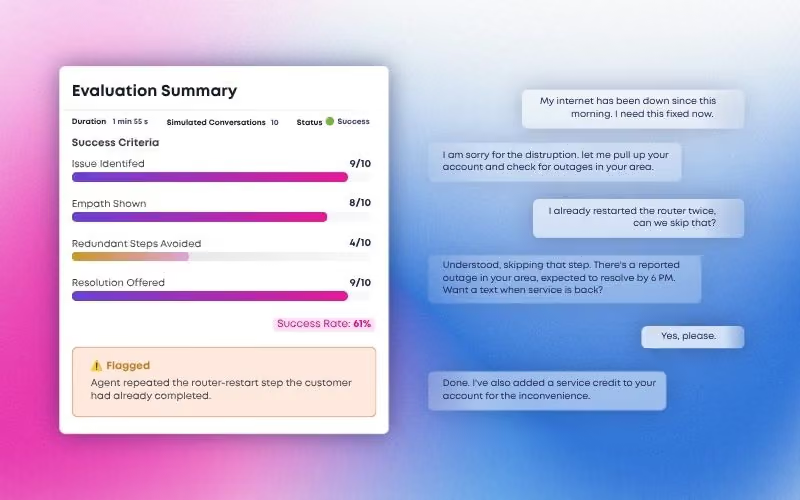
AI can improve call center performance by streamlining the evaluation process for call center agent performance. Instead of relying on manual evaluations, call center managers can use AI to evaluate agent performance and identify areas for improvement objectively. AI also allows for advanced coaching and training methods to help agents enhance their skills and performance.
Empower Your Agents to Perform Better with Knovvu AQM
Monitoring agent performance is crucial for running a successful call center, but traditional performance management tools often provide an incomplete view. Knovvu AQM offers a comprehensive approach to performance analysis that covers agent performance, customer satisfaction, and overall quality.
By analyzing 100% of call recordings through Speech Analytics, Knovvu AQM uses Advanced Quality Management to provide a more accurate agent performance analysis. This system uses metrics like willingness to help, positive attitude, and formal speech to give a complete picture of agent performance.
Knovvu AQM provides an effective coaching tool that relies on data, not personal views. This approach ensures accurate performance analysis and better commitment to feedback. Since agents know their performance is being evaluated objectively, they can improve their weaknesses, develop self-control, and perform better, resulting in a high-quality call center performance.
Request a demo today
Are you looking for a powerful solution to take your call center agent performance to the next level? Knovvu AQM's Advanced Quality Management can help you objectively score and improve agent performance with tangible feedback. You'll be amazed at how your call center service quality improves alongside your high-performing agents.
Request a demo today by filling out the form, and our team will be in touch soon to discuss how we can help you elevate your call center performance!



.avif)
.avif)
.avif)




.avif)