Customer calls provide invaluable insights into customer experience, call center processes, service quality, and emerging trends within the industry. However, due to the high call volume, manual analysis of these calls becomes impractical, which prevents revealing such insights. Speech analytics emerges as an effective solution to automate this analysis process. This article will explore the basics of speech analytics, including its definition, functionality, types, and primary use cases within call centers.
What is Speech Analytics?
Speech analytics software uses speech recognition, artificial intelligence, and natural language processing (NLP) to analyze customer interactions and extract meaningful insights for quality assurance.
While speech analytics, voice analytics, interaction analytics, and conversational analytics are often used interchangeably, they each have distinct focuses. Speech analytics analyzes spoken content for keywords, sentiment, and linguistic elements, while voice analytics examines speaker characteristics like tone and emotions. Interaction analytics assesses interactions across channels, and conversational analytics studies entire conversations for context and flow.
How does Speech Analytics work?
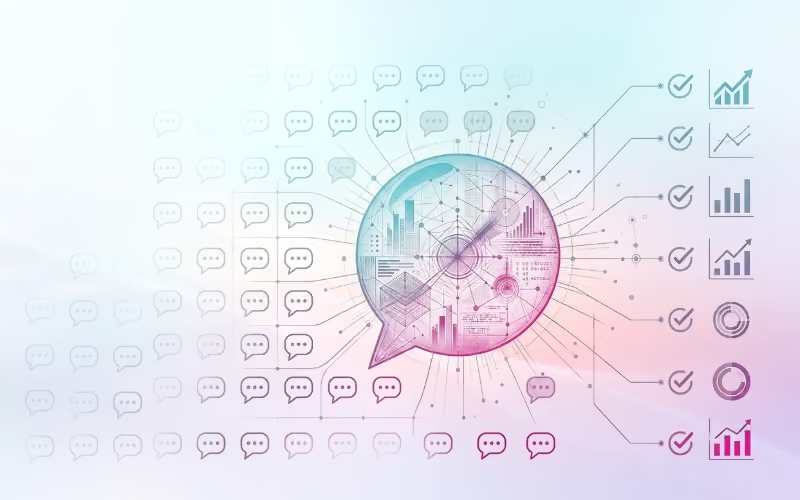
Speech analytics captures audio data from various customer interactions and utilizes speech recognition to convert spoken words into text transcripts. These transcripts are then analyzed using natural language processing technology to identify keywords, phrases, sentiments, and other linguistic elements. This in-depth analysis provides insights into customer satisfaction, service quality, areas for improvement, and compliance issues.
Types of Speech Analytics
Speech analytics technology comes in two types, depending on when the audio data is analyzed: real-time speech analytics and post-call speech analytics.
Real-time speech analytics analyzes audio data on live calls during customer interactions, providing immediate insights. This feature is especially useful in customer service and support calls, allowing supervisors to intervene promptly in challenging situations.
Post-call speech analytics, on the other hand, analyzes recorded calls after they have ended. Transcribing recorded calls into text converts interactions into searchable data, allowing speech analytics to employ data mining methods for extracting valuable insights.
Contact Center Use Cases for Speech Analytics
Speech analytics applications offer unique capabilities for handling key tasks in contact centers. Common use cases include quality management, compliance assurance, customer service enhancement, and process improvement.
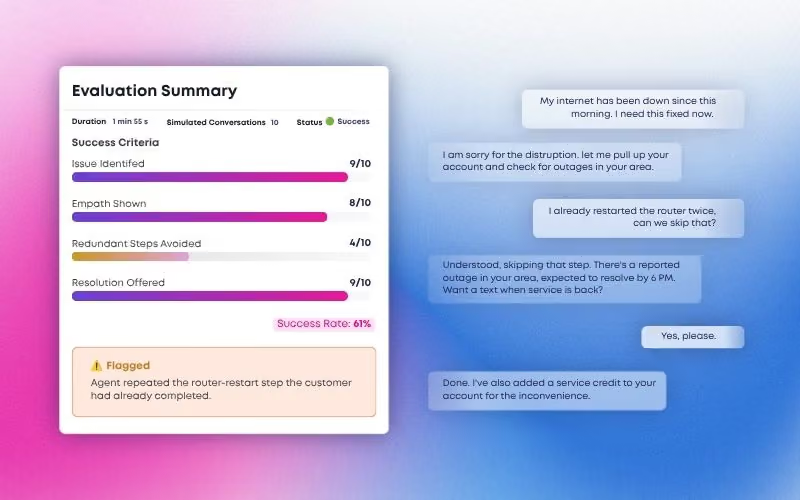
Quality Management: Speech analytics streamlines call analysis, replacing manual evaluation with automated processes. By ensuring consistent and objective analysis, it minimizes human error and provides unbiased evaluations. This results in enhanced quality monitoring and performance management within contact centers.
Compliance Assurance: Speech analytics is used to ensure that agents follow regulatory guidelines and company policies. By automatically detecting instances of non-compliance, speech analytics reduces the risk of regulatory violations and associated penalties.
Customer Service Enhancement: Speech analytics identifies trends, issues, and areas for improvement in customer experience, allowing companies to offer tailored services that better meet customer needs. By understanding customer sentiment, preferences, and pain points, companies can improve overall customer experience, enhancing customer satisfaction and reducing customer churn.
Process Improvement: Speech analytics helps call center leaders identify crucial topics, from emerging issues to rising trends, by analyzing keywords and phrases used in customer interactions. Timely identification of such issues enables prompt action to implement corrective measures and identify opportunities for operational improvement, streamlining processes effectively.
Agent Assist / Guidance: Real-time guidance is designed to support agents and supervisors at call centers. This feature monitors customer interactions, analyzes data to detect issues, and provides immediate notification and guidance to improve the process. This flow enables supervisors to intervene in real time to provide support to agents in need. The solution effectively reduces escalations and call handling time, which results in decreased operational costs and improved customer experience.
In conclusion, speech analytics is an essential tool in call centers, automating the analysis of customer interactions. Its capacity to analyze vast amounts of audio data and derive meaningful insights enables call center leaders to streamline quality management, ensure compliance, enhance customer service, and drive process improvement.
Ready to revolutionize your contact center with speech analytics?
Learn more about SESTEK’s speech analytics solution, visit Knovvu Analytics.
Use our cost savings calculator to estimate the expected savings for your organization.
Request a demo today to explore how this cutting-edge technology can elevate your call center and drive success.



.avif)
.avif)
.avif)





.avif)