Keeping sensitive information safe from personal devices to large corporate networks is a constant challenge. Hackers are getting smarter, and traditional security measures—like passwords—are struggling to keep up. That’s where voice recognition technology comes in.
What is Voice Recognition Technology?
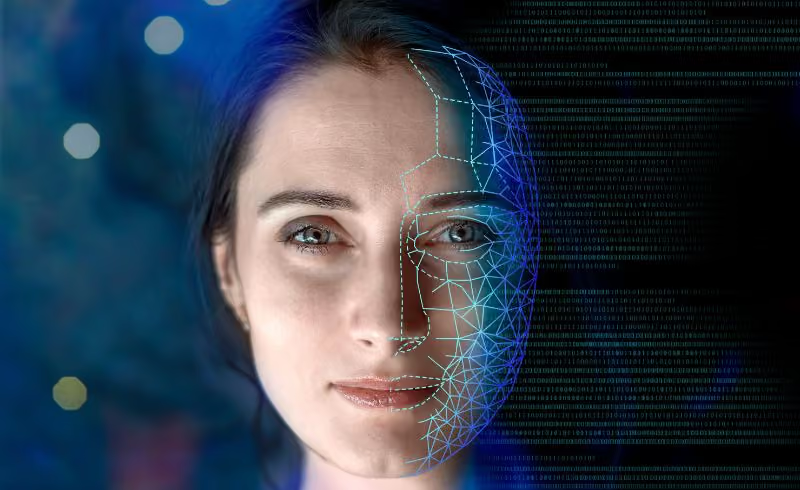
Voice recognition technology is a sophisticated biometric authentication method that analyzes the unique features of an individual’s voice to create a “voiceprint,” similar to a fingerprint. Powered by machine learning and AI, these systems continuously adapt to the speaker’s voice over time, improving accuracy and efficiency. Natural Language Processing (NLP) helps the system understand not just what words are spoken but the intent behind them.
The Revolution of Voice Technology
Today, advances in AI, machine learning and cloud computing have revolutionized voice recognition, enabling seamless integration into everyday life. From virtual assistants like Alexa and Siri to sophisticated security applications, voice technology is now a game-changer in authentication and access control.
Why Voice Technology in Cybersecurity?
Traditional methods such as passwords and PINs are increasingly inadequate. Voice technology addresses these vulnerabilities by introducing a biometric layer that cannot be easily stolen or guessed, offering a more secure and user-friendly alternative.
Real-Life Uses of Voice Technology
- Banking: Banks use voice biometrics for secure customer authentication—no PINs or passwords needed.
- Healthcare: Doctors dictate patient records via voice-enabled devices, saving time and reducing errors.
- Retail: Voice assistants help customers shop, track orders, and get personalized support.
Challenges and Risks of Voice Recognition
- Voice Spoofing: Hackers can use recorded or fake voices to bypass security.
- Noise Issues: Background sounds can interfere with accuracy.
- Privacy Concerns: Voice data needs to be stored securely to prevent misuse.
- Accessibility: Not everyone’s voice is easily recognizable, especially those with accents or speech impairments.
Trends in Voice Technologies and Cybersecurity
- Voice Biometrics in Multi-Factor Authentication: Combining voice with facial recognition or behavioral biometrics is becoming standard.
- AI-Powered Anomaly Detection: AI detects unusual patterns in voice commands to prevent unauthorized access.
- Edge Computing in Voice Security: Processing voice data locally minimizes cloud transmission exposure.
These advancements come at a critical time, as 44% of respondents have expressed concerns about AI voice scams.
Legal and Ethical Implications
- Data Ownership: Who owns and controls voice data collected by devices?
- Compliance with Data Protection Laws: Adherence to regulations like GDPR and CCPA when processing voice biometrics.
- Ethical Use of Voice Data: Organizations must be transparent about how voice data is used, stored, and protected.
Potential Risks and Limitations
1. Voice Spoofing and Impersonation: Hackers can record a target’s voice and use sophisticated software to mimic it. Attackers can employ deepfake technology to synthesize realistic voice samples, making multi-layered security measures essential.
2. Environmental Noise: Background sounds can cause a voice biometric system to fail to authenticate a legitimate user or falsely accept an imposter.
3. Privacy Concerns: Voiceprints are unique and personal. If attackers gain access to a database of voiceprints, they could misuse this data to impersonate individuals.
4. Health and Accessibility: Individuals with speech impairments, non-native speakers, or those with accents might face challenges, requiring continuous refinement of algorithms.
5. Reliability of Voiceprints: Voice can change due to illness, aging, or emotional state, so systems must incorporate fallback authentication methods.
6. Lack of Regulation and Standardization: The rapid adoption of voice recognition in banking and healthcare demands urgent regulatory oversight to ensure secure and ethical data handling.
A Multi-Layered Approach
Voice recognition works best when combined with other security measures:
- Two-Factor Authentication (2FA): Pairing voice recognition with one-time codes or physical tokens.
- Behavioral Biometrics: Using voice alongside typing speed or navigation habits for a more comprehensive user profile.
- Encryption and AI Monitoring: Securing voice data with encryption and using AI to detect anomalies.
By adopting a layered approach, organizations can mitigate the limitations of voice recognition while maximizing its benefits, creating a robust defense against cyber threats.
Final Thoughts
Voice recognition is changing the game in cybersecurity. It offers a secure, easy-to-use solution for today’s digital world. However, to unlock its full potential, we must address its risks and use it alongside other security measures.
Author: Berkay Vuran, Senior Product Analyst



.avif)

.avif)
.avif)




.avif)