AI-based virtual assistants are gaining popularity across various industries, fueled by advancements in Generative AI. These tools offer a range of benefits, from enhancing customer service and employee support to automating routine tasks and providing 24/7 assistance.
In this blog post, we’ll explore 10 use cases for AI-powered virtual assistants, demonstrating how they boost operational efficiency and deliver personalized, seamless experiences.
How Different Industries Use Virtual Assistants
1. Banking and Finance
Virtual assistants in banking and finance enhance customer service and simplify financial operations. They assist customers with tasks such as checking account balances, making transfers, paying bills, and answering frequently asked questions. Internally, virtual assistants help financial institutions by automating tasks such as fraud detection, compliance monitoring, and data analysis, helping reduce the risk of human error and ensure regulatory compliance.
2. Customer Service
Virtual assistants enhance customer service by providing immediate, round-the-clock support. They handle common inquiries such as order status, account information, and troubleshooting. When needed, they can escalate issues to human agents, ensuring customers receive comprehensive assistance and reducing the workload on human agents.
3. Telecommunications
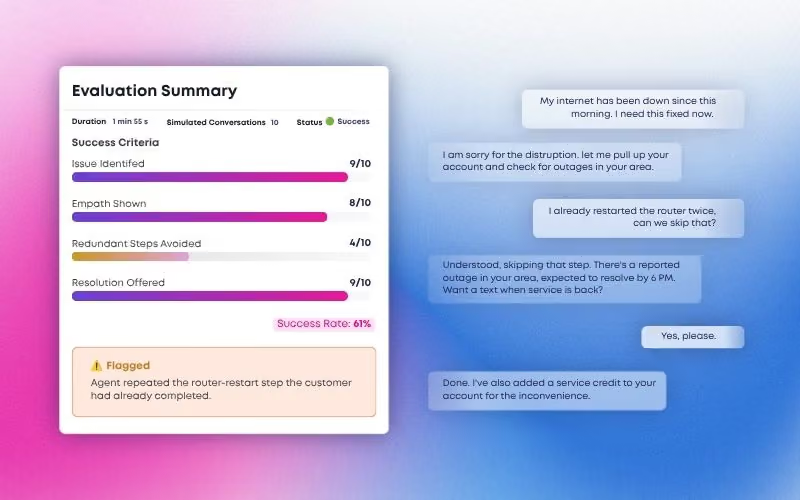
In telecommunications, virtual assistants handle routine tasks such as answering frequently asked questions about service plans, troubleshooting common issues, and guiding customers through account management. They also assist in managing service requests and scheduling maintenance, which improves operational efficiency and customer satisfaction.
4. Government and Public Services
In Türkiye, the Directorate of Immigration Management partnered with SESTEK to implement speech-enabled IVR in seven languages using AI-powered conversational technologies, automating responses to common inquiries and significantly improving efficiency.
5. Healthcare
Virtual assistants in healthcare provide 24/7 support by answering patient inquiries, scheduling appointments, and sending reminders for medication or follow-ups. They also assist with administrative tasks such as retrieving patient information, updating records, and processing insurance claims.
6. Retail and E-commerce
In retail and e-commerce, virtual assistants assist customers by answering questions about product details, tracking orders, and handling returns. They also support backend operations by managing inventory, processing transactions, and providing data insights.
7. Automotive
Virtual assistants in the automotive industry allow drivers to manage navigation, entertainment, and climate control with simple voice commands, reducing distractions and improving safety. They also offer advanced features like vehicle health monitoring and hands-free communication.
8. Education
Virtual assistants in education assist students by answering questions about course content, deadlines, or school policies. They also help educators and administrators with tasks such as grading, scheduling, and communicating with parents.
9. Human Resources
Virtual assistants in human resources handle routine activities such as managing employee queries, scheduling interviews, and processing leave requests. They also support onboarding by guiding new employees through required paperwork and answering common questions.
10. Travel and Hospitality
Virtual assistants in the travel and hospitality industry assist travelers by providing information about destinations, helping with hotel reservations, and answering queries about travel schedules. They also support check-ins, check-outs, processing cancellations, and managing special requests.
What the Future Holds
As virtual assistants continue to gain popularity, their role in business and daily life is expected to expand. With their ability to enhance efficiency, provide personalized support, and automate routine tasks, it’s easy to envision a future where everyone has a virtual assistant to help with both personal and professional activities.
For more information about SESTEK’s virtual assistant solutions, check out the Knovvu Virtual Agent page. Calculate the potential savings using our virtual agent cost savings calculator. Request a demo today to explore the top applications of virtual assistants for your personal and business needs.



.avif)

.avif)
.avif)





.avif)